
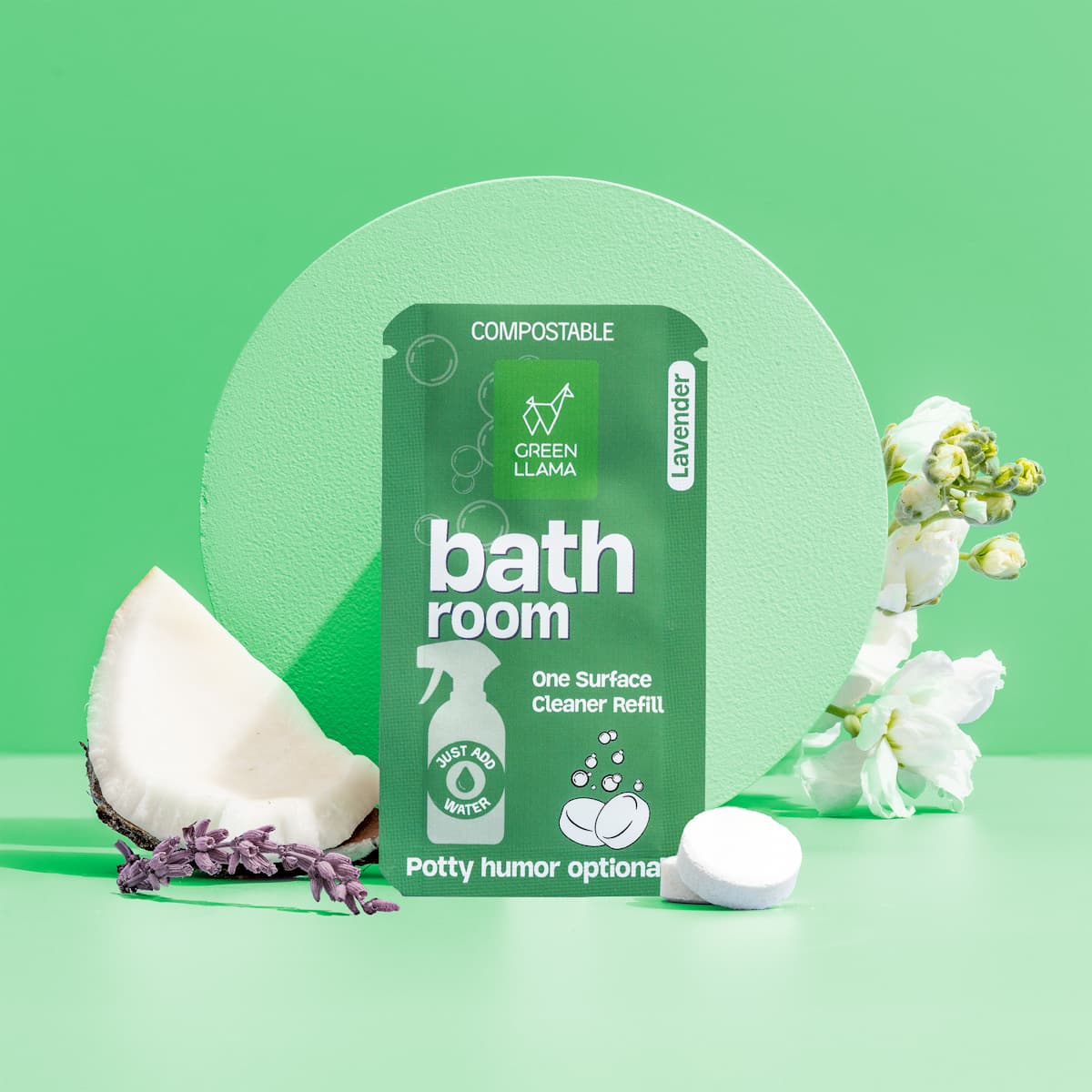
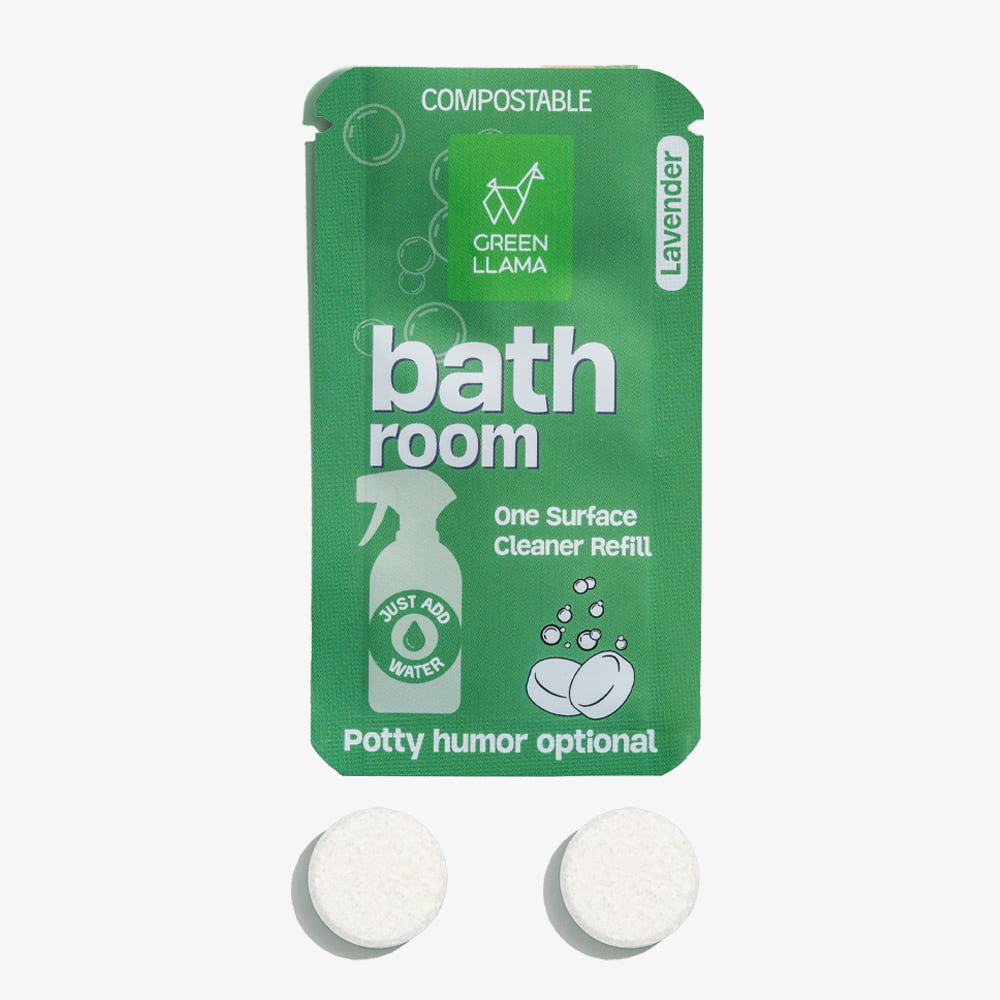
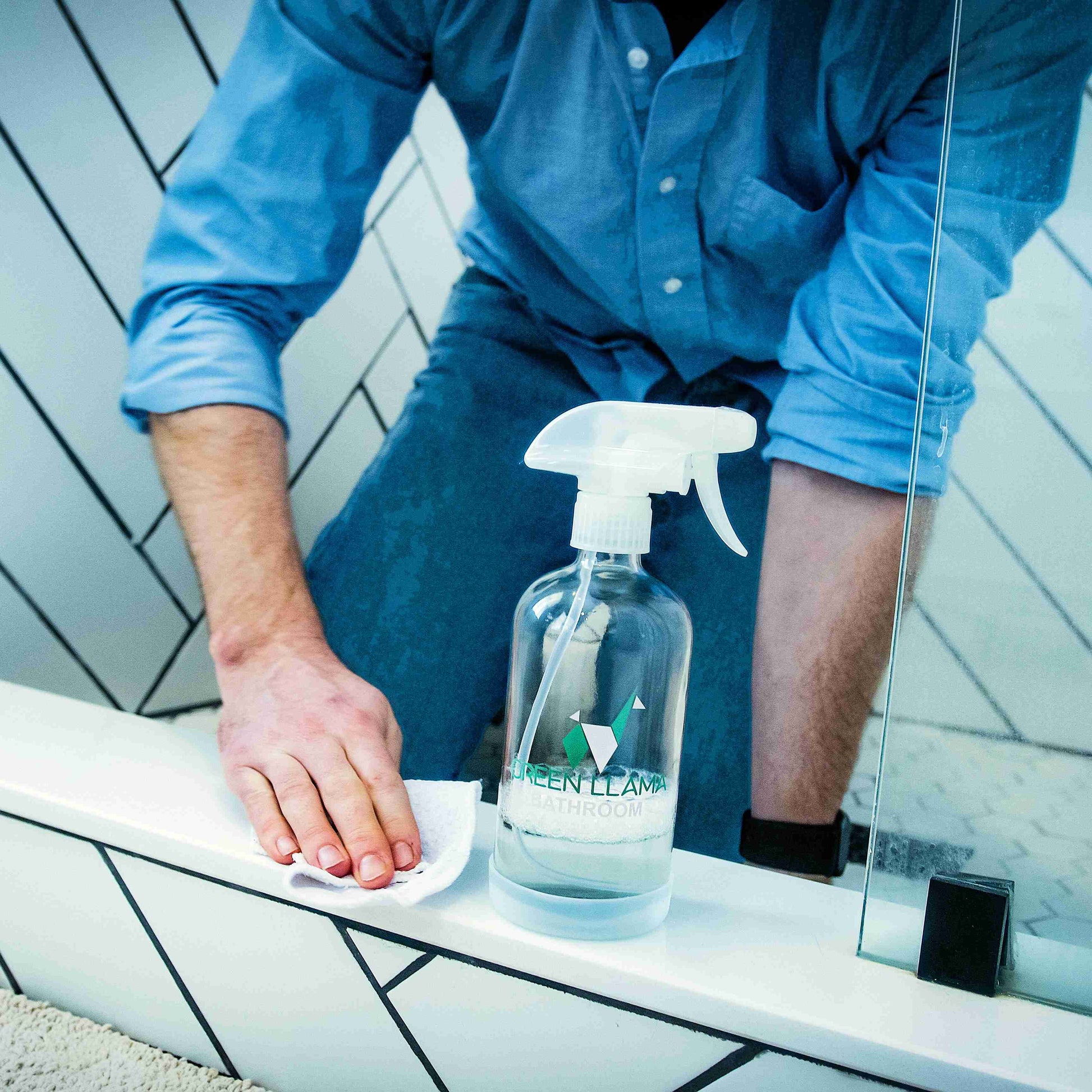


Bathroom Cleaner Refills - Lavender Fragrance
Bathroom Revolution: Green Llama Refill Tablets
Step into a future of sparkling surfaces and eco-conscious cleaning with Green Llama's Bathroom Refill Tablets. These powerful tablets are a testament to our commitment to blending cleaning potency with environmental responsibility.
Green Llama: Clean Consciously, Breathe Easier.Bergamot Oil, Cedarwood Oil, Citric Acid, Lavandin Oil, Lavender Oil, Olibanum (Frankincense) Oil, Rosemary Oil, Sodium Benzoate, Sodium Carbonate, Sodium Coco Sulfate, Sorbitol, Ylang Ylang Oil
See what each one does ↓ →
Bathroom Cleaner Refills - Lavender Fragrance
The Green Llama promise
90-day money-back guarantee
Don't love it? Get your money back within 90 days.
Scented with essential oils
Plant-based scent, no synthetic fragrance.
Safe around kids and pets
Non-toxic when used as directed.
No water shipped
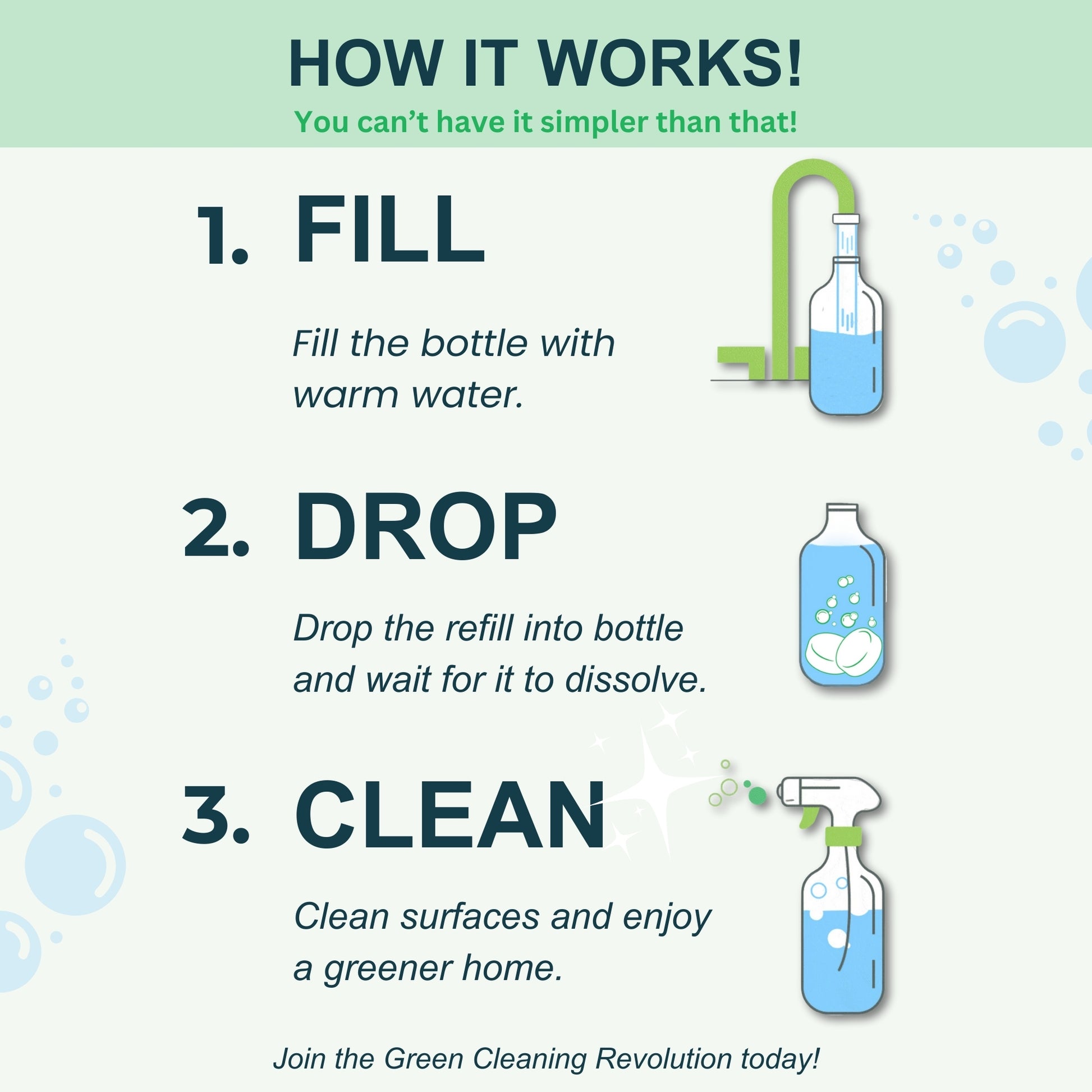
Concentrated tablets and powders. You add the water at home.
Ingredient transparency
What's inside
Every ingredient, what it does and where it comes from. Nothing hidden behind the word "fragrance".
- 12 ingredients, all listed
- 5 of 12 on the EPA Safer Choice list
- Scented with essential oils only
Bergamot OilCitrus aurantium bergamia (bergamot) fruit oil Fragrance. Adds a citrus scent with a floral edge. Source: Plant-based EPA Safer Choice: Not listed
Essential oil from the peel of the bergamot orange. Used for scent only, not as a cleaning agent.
Why we use it: Gives the product part of its scent. It is listed by name, so you know exactly what you are smelling.
The science: Main aroma compounds are limonene, linalyl acetate and linalool. Limonene and linalool are recognized fragrance allergens, worth knowing if you are sensitive to scents.
Comes from: from bergamot orange peelCAS 8007-75-8
EPA Safer Choice entry →EWG's page on Bergamot Oil →More about Bergamot Oil →
Cedarwood OilJuniperus mexicana (Texas cedarwood) oil Fragrance. Adds a dry, woody scent. Source: Plant-based EPA Safer Choice: Not listed
Essential oil from cedarwood. Used for scent only, not as a cleaning agent.
Why we use it: Gives the product part of its scent. It is listed by name, so you know exactly what you are smelling.
The science: Texas cedarwood oil is mainly cedrol, thujopsene and alpha-cedrene.
Comes from: from cedarwoodCAS 68990-83-0
Citric Acid2-Hydroxypropane-1,2,3-tricarboxylic acid Chelating agent and descaler. Dissolves limescale and mineral film and binds hard-water minerals. Source: Natural EPA Safer Choice: Listed
The acid that makes lemons sour. Today almost all citric acid is made by fermenting plant sugars, not pressed from fruit.
Why we use it: Clears cloudy residue and water spots. Helps the rest of the formula work in hard water.
The science: Citric acid dissolves calcium carbonate scale, then binds the freed calcium and magnesium ions so they don't redeposit as new scale.
Comes from: fermentation of plant sugarsCAS 77-92-9
EPA Safer Choice entry →EWG's page on Citric Acid →More about Citric Acid →
Lavandin OilLavandula hybrida (lavandin) oil Fragrance. Adds a brighter, more herbal lavender scent. Source: Plant-based EPA Safer Choice: Not listed
Essential oil from the flowers of lavandin, a lavender hybrid. Used for scent only, not as a cleaning agent.
Why we use it: Gives the product part of its scent. It is listed by name, so you know exactly what you are smelling.
The science: Like lavender, it is rich in linalool and linalyl acetate, with more camphor, which gives it a sharper, more herbal note. Linalool is a recognized fragrance allergen, worth knowing if you are sensitive to scents.
Comes from: from lavandin flowersCAS 8022-15-9
Lavender OilLavandula angustifolia (lavender) oil Fragrance. Adds a floral lavender scent. Source: Plant-based EPA Safer Choice: Not listed
Essential oil from lavender flowers. Used for scent only, not as a cleaning agent.
Why we use it: Gives the product part of its scent. It is listed by name, so you know exactly what you are smelling.
The science: Main aroma compounds are linalool and linalyl acetate. Linalool is a recognized fragrance allergen, worth knowing if you are sensitive to scents.
Comes from: from lavender flowersCAS 90063-37-9
EPA Safer Choice entry →EWG's page on Lavender Oil →More about Lavender Oil →
Olibanum (Frankincense) OilBoswellia carterii (frankincense) oil Fragrance. Adds a warm, resinous scent. Source: Plant-based EPA Safer Choice: Not listed
Frankincense essential oil, from the resin of the Boswellia tree. Used for scent only, not as a cleaning agent.
Why we use it: Gives the product part of its scent. It is listed by name, so you know exactly what you are smelling.
The science: Rich in monoterpenes, mainly alpha-pinene, with some limonene. The exact mix varies with the Boswellia species and where the resin was harvested.
Comes from: from Boswellia (frankincense) resinCAS 8016-36-2
EPA Safer Choice entry →More about Olibanum (Frankincense) Oil →
Rosemary OilRosmarinus officinalis (rosemary) leaf oil Fragrance. Adds a fresh, herbal scent. Source: Plant-based EPA Safer Choice: Not listed
Essential oil from rosemary leaves. Used for scent only, not as a cleaning agent.
Why we use it: Gives the product part of its scent. It is listed by name, so you know exactly what you are smelling.
The science: Main components are 1,8-cineole, camphor and alpha-pinene. The balance varies with where the rosemary was grown.
Comes from: from rosemary leavesCAS 8000-25-7
Sodium BenzoateBenzoic acid, sodium salt Prevents bacteria and mold growth, ensuring your cleaner stays safe and effective from first use to last. Source: Synthetic EPA Safer Choice: Listed
A food-grade preservative that keeps products fresh without harsh chemicals.
Why we use it: Keeps products fresh naturally, prevents contamination, used in food industry, effective at low levels.
The science: One of the most studied preservatives. Used safely in foods and beverages worldwide.
Comes from: but naturally occurs in many fruitsCAS 532-32-1
EPA Safer Choice entry →EWG's page on Sodium Benzoate →More about Sodium Benzoate →
Sodium CarbonateCarbonic acid disodium salt (Washing Soda) Alkaline builder. Softens hard water and raises the pH so the other ingredients clean better. Source: Mineral EPA Safer Choice: Listed
Also called washing soda or soda ash. A mineral that has been a laundry and dish staple for well over a century.
Why we use it: Keeps hard-water minerals from tying up the cleaning power. Helps loosen greasy, baked-on soil.
The science: Hard water carries calcium and magnesium, which react with surfactants and weaken them. Sodium carbonate binds those minerals first, so the surfactants stay free to clean.
Comes from: mined from natural trona ore or made from salt and limestoneCAS 497-19-8
EPA Safer Choice entry →EWG's page on Sodium Carbonate →More about Sodium Carbonate →
Sodium Coco SulfateSulfuric acid, mono-C12-18-alkyl esters, sodium salts Surfactant. One end grabs grease, the other grabs water, so grime rinses away. Source: Natural EPA Safer Choice: Listed
A surfactant made by sulfating fatty alcohols from coconut oil. It is a strong grease cutter and foams well.
Why we use it: Cuts grease and oily film. Plant-derived.
The science: Listed on the EPA Safer Choice Safer Chemical Ingredients List (as C12-18 alkyl sulfates, sodium salts).
Comes from: coconut oilCAS 68955-19-1
EPA Safer Choice entry →EWG's page on Sodium Coco Sulfate →More about Sodium Coco Sulfate →
SorbitolD-Glucitol Binder. Helps hold tablets together so they stay firm in the pouch. Source: Plant-based EPA Safer Choice: Listed
A sugar alcohol made by hydrogenating glucose from plant starch, such as corn.
Why we use it: Firm tablets that hold their shape.
The science: Affirmed by the FDA as generally recognized as safe (GRAS) for food use (21 CFR 184.1835) and listed on the EPA Safer Choice Safer Chemical Ingredients List.
Comes from: corn or other plantsCAS 50-70-4
EPA Safer Choice entry →EWG's page on Sorbitol →More about Sorbitol →
Ylang Ylang OilCananga odorata flower oil Fragrance. Adds a rich, sweet floral scent. Source: Plant-based EPA Safer Choice: Not listed
Essential oil from ylang-ylang flowers. Used for scent only, not as a cleaning agent.
Why we use it: Gives the product part of its scent. It is listed by name, so you know exactly what you are smelling.
The science: Key aroma compounds include germacrene D, linalool and benzyl acetate. Linalool and several other compounds in the oil are recognized fragrance allergens, worth knowing if you are sensitive to scents.
Comes from: from ylang-ylang flowersCAS 8006-81-3
Essential oils show as Not listed because they are not on the EPA Safer Choice ingredient list. We name every oil individually, so the scent is never a mystery.

A fresh bathroom, minus the bottle
FAQ's - Questions, answered
Everything you need to know about Bathroom Cleaner Refills - Lavender Fragrance
Still have questions or spotted an error?
Contact Our Team


