


4-Month Stock-Up
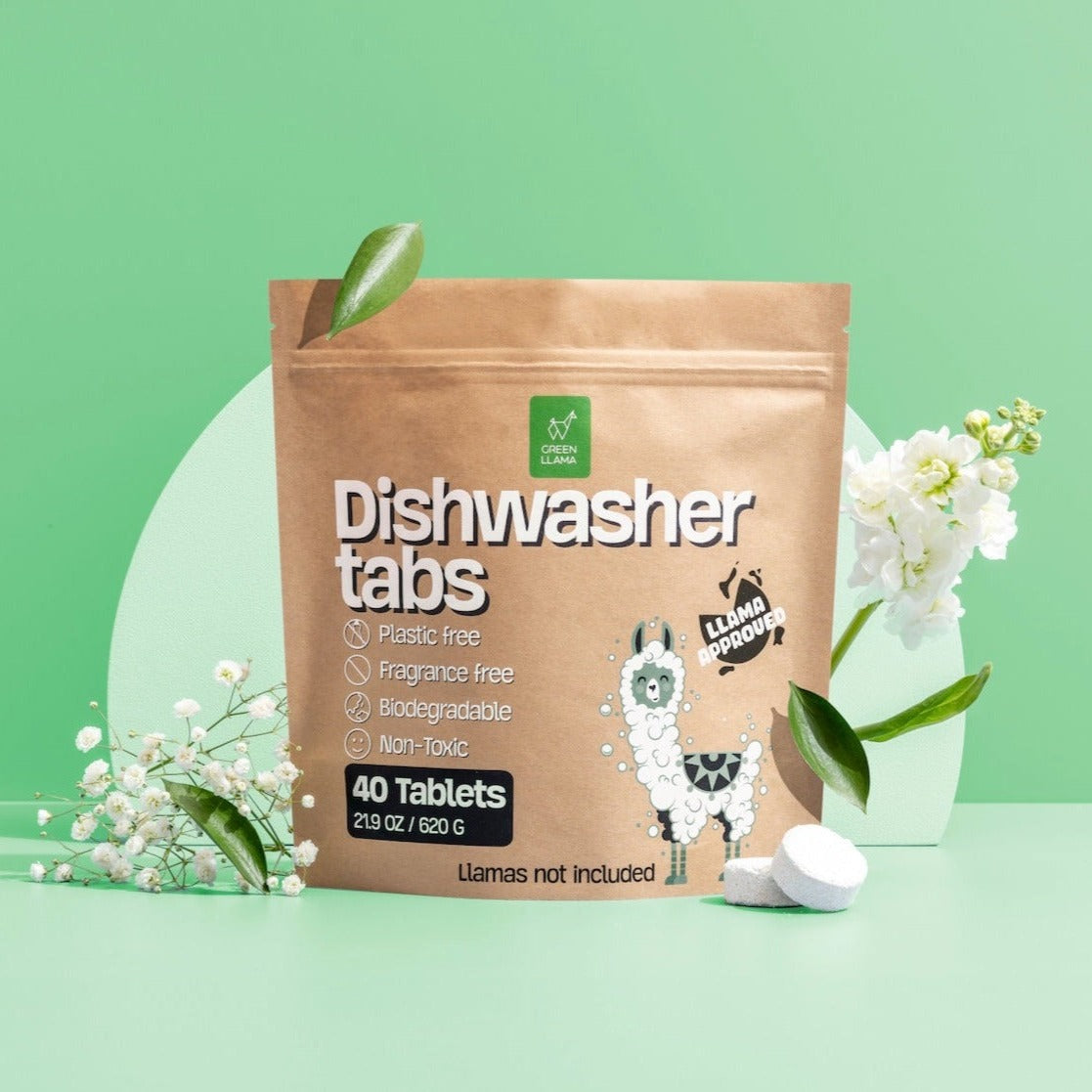
Not ready to commit to a full year? Fair. Two packs of dishwasher tabs and two pouches of laundry powder will carry most homes through the next few months.
What's inside
- 2 x EWG Verified Dishwasher Tabs, 40-pack (80 tabs)
- 2 x EWG Verified Max Strength Laundry Powder, 60 loads (120 loads)
- 1 x Wooden Laundry Scoop (one scoop is one tablespoon, the right amount for a standard load)
How long it lasts
Going by our reorder data, the typical household finishes a 40-pack of tabs and a 60-load pouch of laundry powder about every two months, so two of each lasts about four months. If you run the dishwasher every day, the tabs will go faster.
What they do
- Dishwasher tabs: cut through dried-on food and grease, with no plastic film wrapped around them to dissolve. Fragrance-free, so your glasses come out smelling of nothing at all, which is what clean actually smells like.
- Laundry powder: oxygen bleach lifts stains and brightens whites, even in cool washes. Two enzymes, amylase and protease, do the specialist work on sweat, food, grass and blood. Gentle enough for babies, pets and sensitive skin.
What's not in them
No PVA, no synthetic fragrance, no dyes. The laundry powder skips optical brighteners too: they coat fabric so it looks whiter without being any cleaner. The tabs come in compostable pouches instead of a plastic tub.
Citric Acid, Decyl Glucoside, Protease, Amylase, Polyitaconic Acid, Sodium Carbonate, Sodium Citrate, Sodium Gluconate, Sodium Lauryl Sulfoacetate, Sodium Metasilicate, Sodium Percarbonate, Sodium Polyaspartate, TAED
See what each one does ↓ →
4-Month Stock-Up
The Green Llama promise
90-day money-back guarantee
Don't love it? Get your money back within 90 days.
EWG Verified
Meets EWG's strictest standard for health and transparency.
Fragrance-free
No added scent, nothing left behind on skin or fabric.
No water shipped
Concentrated tablets and powders. You add the water at home.
Ingredient transparency
What's inside
Every ingredient, what it does and where it comes from. Nothing hidden behind the word "fragrance".
- 13 ingredients, all listed
- All 13 on the EPA Safer Choice list
- EWG Verified™ product
- Fragrance-free
Citric Acid2-Hydroxypropane-1,2,3-tricarboxylic acid Chelating agent and descaler. Dissolves limescale and mineral film and binds hard-water minerals. Source: Natural EPA Safer Choice: Listed
The acid that makes lemons sour. Today almost all citric acid is made by fermenting plant sugars, not pressed from fruit.
Why we use it: Clears cloudy residue and water spots. Helps the rest of the formula work in hard water.
The science: Citric acid dissolves calcium carbonate scale, then binds the freed calcium and magnesium ions so they don't redeposit as new scale.
Comes from: fermentation of plant sugarsCAS 77-92-9
EPA Safer Choice entry →EWG's page on Citric Acid →More about Citric Acid →
Decyl GlucosideD-Glucopyranose, oligomeric, C8-16-alkyl glycosides Surfactant. A nonionic cleaner made by joining glucose to a fatty alcohol. Source: Plant-based EPA Safer Choice: Listed
An alkyl polyglucoside made from glucose (from plant starch) and a fatty alcohol, typically from coconut or palm kernel oil. Because it is nonionic, it pairs well with other surfactants.
Why we use it: Steady cleaning with moderate foam. Typically plant-derived.
The science: Listed on the EPA Safer Choice Safer Chemical Ingredients List.
Comes from: glucose from plant starch and a fatty alcohol, typically from coconut or palm kernel oilCAS 141464-42-8
ProteaseProtease, amylase enzyme blend Different enzymes target different stains - breaking down proteins, starches, and fats so they rinse away easily. Source: Natural EPA Safer Choice: Listed
Nature's stain fighters - powerful proteins that break down messes at the molecular level.
Why we use it: Works in cold water (saves energy), tackles impossible stains, replaces harsh chemicals, completely natural process.
The science: Proven effective even in cold water. Completely biodegradable - they're just proteins after all.
Comes from: fermentation processCAS Various (proprietary blend)
EPA Safer Choice entry →EWG's page on Protease →More about Protease →
AmylaseProtease, amylase enzyme blend Different enzymes target different stains - breaking down proteins, starches, and fats so they rinse away easily. Source: Natural EPA Safer Choice: Listed
Nature's stain fighters - powerful proteins that break down messes at the molecular level.
Why we use it: Works in cold water (saves energy), tackles impossible stains, replaces harsh chemicals, completely natural process.
The science: Proven effective even in cold water. Completely biodegradable - they're just proteins after all.
Comes from: fermentation processCAS Various (proprietary blend)
EPA Safer Choice entry →EWG's page on Amylase →More about Amylase →
Polyitaconic AcidPoly(methylenesuccinic acid) Acts like a bouncer for dirt - once it's lifted from surfaces, this ingredient keeps it suspended in water so it rinses away. Source: Bio-based EPA Safer Choice: Listed
A smart polymer that keeps dirt from settling back on clean surfaces.
Why we use it: Prevents that frustrating re-soiling, completely biodegradable, makes one wash actually work.
The science: Proven biodegradable through standard testing. Breaks down completely in the environment.
Comes from: fermentation processCAS 26099-09-2
EPA Safer Choice entry →EWG's page on Polyitaconic Acid →More about Polyitaconic Acid →
Sodium CarbonateCarbonic acid disodium salt (Washing Soda) Alkaline builder. Softens hard water and raises the pH so the other ingredients clean better. Source: Mineral EPA Safer Choice: Listed
Also called washing soda or soda ash. A mineral that has been a laundry and dish staple for well over a century.
Why we use it: Keeps hard-water minerals from tying up the cleaning power. Helps loosen greasy, baked-on soil.
The science: Hard water carries calcium and magnesium, which react with surfactants and weaken them. Sodium carbonate binds those minerals first, so the surfactants stay free to clean.
Comes from: mined from natural trona ore or made from salt and limestoneCAS 497-19-8
EPA Safer Choice entry →EWG's page on Sodium Carbonate →More about Sodium Carbonate →
Sodium Citrate1,2,3-Propanetricarboxylic acid, 2-hydroxy-, sodium salt Chelating agent. Binds hard-water minerals so the cleaning ingredients can do their job. Source: Bio-based EPA Safer Choice: Listed
The sodium salt of citric acid, made by neutralizing citric acid with a sodium base.
Why we use it: Better cleaning in hard water, with fewer spots and less film.
The science: Citrate is a common phosphate-free builder. It holds calcium and magnesium in solution so they can't tie up surfactants or settle out as scale.
Comes from: made from fermentation-derived citric acidCAS 994-36-5
Sodium Gluconate Chelating agent. Grabs hard-water minerals that cause spots and film. Source: Plant-based EPA Safer Choice: Listed
The sodium salt of gluconic acid, made from glucose, usually by fermentation.
Why we use it: Fewer water spots and better cleaning in hard water.
The science: Gluconate binds calcium and iron ions and holds them in solution. It works especially well in alkaline wash water, like the inside of a running dishwasher.
Comes from: fermented from plant-derived glucoseCAS 527-07-1
EPA Safer Choice entry →EWG's page on Sodium Gluconate →More about Sodium Gluconate →
Sodium Lauryl SulfoacetateAcetic acid, 2-sulfo-, dodecyl ester, sodium salt (1:1) Surfactant. Makes a dense, stable foam that helps lift dirt away. Source: Plant-based EPA Safer Choice: Listed
A surfactant made from lauryl alcohol, typically sourced from coconut or palm kernel oil. It is a sulfoacetate, not a sulfate, and is often used in place of SLS.
Why we use it: Rich, stable foam and solid everyday cleaning.
The science: Listed on the EPA Safer Choice Safer Chemical Ingredients List.
Comes from: lauryl alcohol from coconut or palm kernel oilCAS 1847-58-1
EPA Safer Choice entry →EWG's page on Sodium Lauryl Sulfoacetate →More about Sodium Lauryl Sulfoacetate →
Sodium MetasilicateSilicic acid (H2SiO3), disodium salt Alkaline builder. Breaks down grease and helps protect glass and metal from corrosion in the wash. Source: Mineral EPA Safer Choice: Listed
A mineral-based compound made from sand and soda ash. It keeps the wash water strongly alkaline so greasy soil breaks down.
Why we use it: Shifts baked-on grease and helps protect glassware and metal parts during the wash.
The science: In dishwasher detergents, silicates help protect glass, china glaze and aluminum by forming a thin protective film on their surfaces.
Comes from: derived from sand and soda ashCAS 6834-92-0
EPA Safer Choice entry →EWG's page on Sodium Metasilicate →More about Sodium Metasilicate →
Sodium PercarbonateCarbonic acid disodium salt, compound with hydrogen peroxide Oxygen bleach. Releases hydrogen peroxide in water to lift stains and brighten, without chlorine. Source: Mineral EPA Safer Choice: Listed
A solid form of hydrogen peroxide bound to washing soda. When it dissolves, the peroxide goes to work on stains and the washing soda boosts cleaning.
Why we use it: Whitens and brightens with no chlorine, so no bleach smell. Gentler on colors than chlorine bleach; skip it on wool and silk.
The science: Breaks down into water, oxygen and washing soda (sodium carbonate).
Comes from: made from sodium carbonate and hydrogen peroxideCAS 15630-89-4
EPA Safer Choice entry →EWG's page on Sodium Percarbonate →More about Sodium Percarbonate →
Sodium Polyaspartate Dispersant and scale inhibitor. Keeps minerals and soil from re-settling during the wash. Source: Synthetic EPA Safer Choice: Listed
A polymer made of repeating aspartic acid units. Aspartic acid is one of the amino acids.
Why we use it: Helps prevent film and scale buildup.
The science: Polyaspartate disrupts the growth of mineral crystals, which keeps calcium carbonate from building up into scale.
Comes from: made from maleic acid and ammoniaCAS 181828-06-8
EPA Safer Choice entry →EWG's page on Sodium Polyaspartate →More about Sodium Polyaspartate →
TAEDN,N,N',N'-Tetraacetylethylenediamine Bleach activator. Makes oxygen bleach work at lower temperatures. Source: Synthetic EPA Safer Choice: Listed
TAED (tetraacetylethylenediamine) reacts with the peroxide from sodium percarbonate to form a more active bleaching agent that works in warm, not hot, water.
Why we use it: Lets oxygen bleach do its job on warm cycles instead of hot ones, which uses less energy.
The science: The most widely used bleach activator in European laundry powders, and readily biodegradable.
Comes from: made from ethylenediamine and acetic acidCAS 10543-57-4
EPA Safer Choice entry →EWG's page on TAED →More about TAED →
Essential oils show as Not listed because they are not on the EPA Safer Choice ingredient list. We name every oil individually, so the scent is never a mystery.

A season of less plastic
FAQ's - Questions, answered
Everything you need to know about 4-Month Stock-Up
Still have questions or spotted an error?
Contact Our Team


