


Quick answer
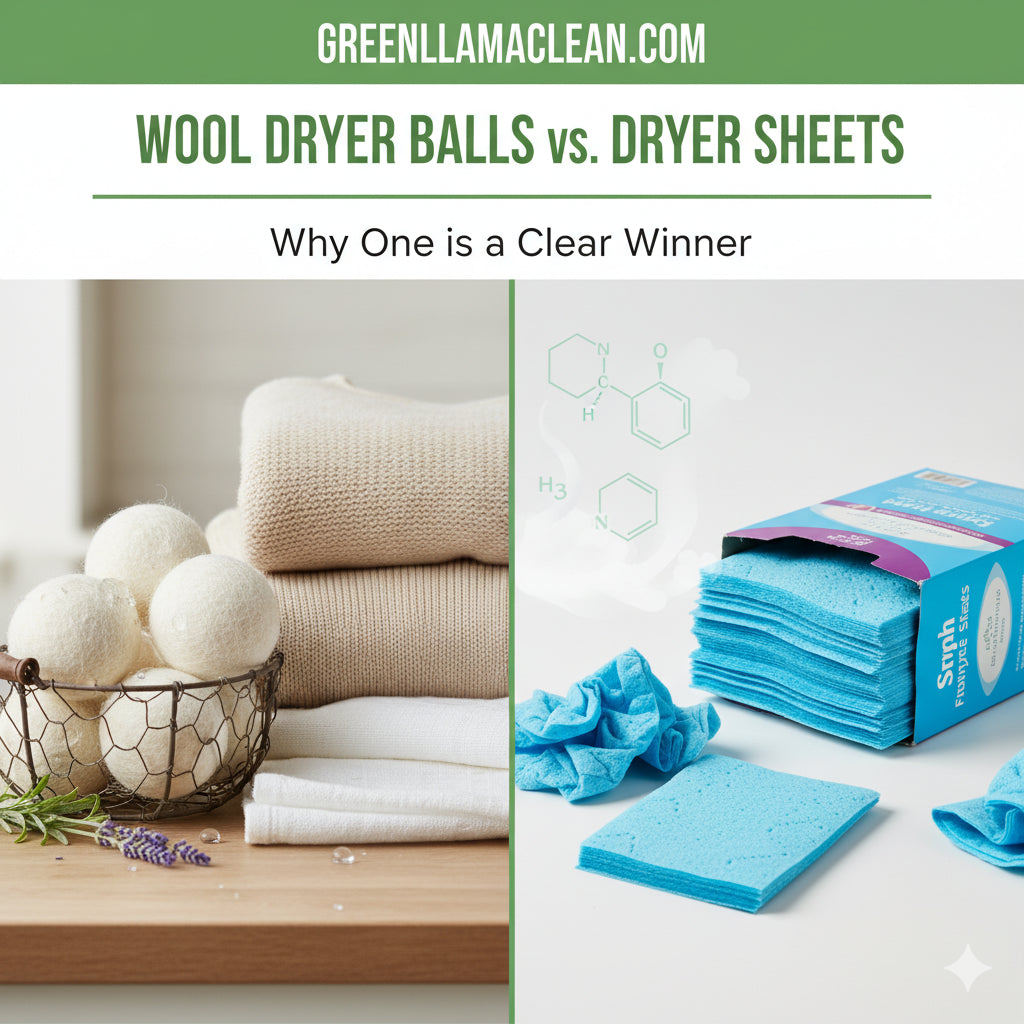
For most households, wool dryer balls are better than dryer sheets. They soften laundry by tumbling instead of coating it, last for hundreds of loads and work out to about 2 cents a load. Dryer sheets still win on static control and built-in scent, and the tips below close most of that gap.
The dryer sheet box is nearly empty, and you're wondering whether to buy another one or finally try the balls.
The most common searches that land here are "dryer balls vs dryer sheets" and "are dryer balls better than dryer sheets." Some people now ask AI assistants to "evaluate" a sheet brand against dryer balls, and that brings them here too. So here's a straight verdict, including the parts where we lose. For everything else about using them, see our guide to using wool dryer balls.
Wool dryer balls vs. dryer sheets at a glance
| Dryer sheets | Wool dryer balls | |
|---|---|---|
| How they soften | Coat fabric with a softening film | Tumble and separate clothes |
| Static control | Strong | Moderate, helped by not over-drying |
| Scent | Built in (unscented versions exist) | None, unless you add essential oil |
| Towels | Leaves a coating on the fibers | No coating |
| Uses | One load, then thrown away | Hundreds of loads |
| Ongoing cost | Buy again every few months | One purchase every few years |
| Drying time | No effect | May shorten it (results vary) |
How we chose
We compared the two on how they soften, static, scent, towels, number of uses, cost per load and drying time. The sources are the American Academy of Dermatology on scented sheets, CHOICE's independent dryer ball test, and our own product page for price and lifespan, not a lab test of our own. Green Llama makes alpaca wool dryer balls.
What's in a dryer sheet?
A dryer sheet is a thin polyester sheet loaded with a softening coating. Heat melts the coating and it transfers onto your clothes.
A typical ingredient list, taken from a Bounce Outdoor Fresh box, reads: polyester sheet, a cationic softener (dialkylester dimethyl ammonium methosulfate, a quaternary ammonium compound or "quat"), fatty acids, bentonite clay and fragrance.
That coating is what makes clothes feel slick and calms static. It also stays on the fabric. On towels, a softener film can make them feel less absorbent, which is why many people skip softener on towels altogether.
How wool dryer balls work
Wool dryer balls are tightly felted balls of wool and nothing else. They bounce between your clothes, pull layers apart and let warm air move through the load.
That softens fabric and stops sheets and towels from twisting into a damp knot. Nothing is left on the fibers.
On drying time, be a little skeptical of big numbers, including ours. Green Llama's product page says our balls cut drying time by up to 25%, and some customers notice it.
Independent tests are less clear: when Australian consumer group CHOICE tested dryer balls, it found no meaningful time or energy savings. Buy them for softness, less waste and lower cost per load, and treat any time saved as a bonus.
Are dryer balls better than dryer sheets for sensitive skin?
For many people, yes. The American Academy of Dermatology notes that scented fabric softener or dryer sheets may contribute to irritation in people with eczema. Wool balls add no fragrance and no coating.
If you have sensitive skin and want to keep using sheets, choose a fragrance-free version.
Our dryer balls are alpaca wool, which contains no lanolin, the natural wax in sheep's wool that some people react to. I'm an occupational therapist, so what touches skin all day is the first question we ask about anything we sell. See alpaca or sheep wool for how the two compare.
What we'd use
Locally Sourced Alpaca Wool Dryer Balls (Pack of 3)
Three balls of locally sourced alpaca wool, which has no lanolin, so they suit people who react to sheep's wool. They soften by tumbling and leave nothing on the fibers. At $19.95 for around 1,000 loads, that's about 2 cents a load, or close to four years of laundry at 5 loads a week.
Shop Locally Sourced Alpaca Wool Dryer Balls (Pack of 3) →Green Llama makes this product.
Cost per load: work out your own number
Dryer sheet prices vary by brand, box size and store, so do this with the box in your laundry room:
- Cost per sheet = box price / sheets in the box.
- Sheets per year = loads per week x 52. At 5 loads a week, that's 260 sheets.
- Yearly sheet cost = cost per sheet x sheets per year.
Now the balls. A pack of 3 Green Llama alpaca dryer balls is $19.95, and our product page puts their life at around 1,000 loads: $19.95 / 1,000 = about 2 cents a load.
At 5 loads a week, 1,000 loads is close to four years of laundry. If your sheets cost more than 2 cents each, the balls are cheaper from the first year on.
The static question
This is where dryer sheets genuinely do better, and our customers will tell you so:
"I expected less static cling when using these balls."
Sandra, verified buyer, our alpaca dryer balls
Wool balls reduce static but won't remove it all, especially in dry winter air or with fleece and polyester. Three things help:
- Take the load out while it's still very slightly damp. Static builds when clothes over-dry.
- Dry synthetics separately from cottons, or on a lower heat.
- Use more balls in big loads so clothes stay separated.
If you live somewhere bone-dry and wear a lot of fleece, you may still want a fragrance-free sheet for those loads. That's a fair call.
So the verdict: choose wool dryer balls if you want soft towels with no coating, fewer things to rebuy and nothing added to your skin. Stick with sheets only if static is your top problem and these tips don't fix it.
Quick questions
How do I make laundry smell good with dryer balls?
Add 2 to 3 drops of a pure essential oil to a couple of balls, let it soak in, and finish the load with a short no-heat tumble. Our guide on how to use wool dryer balls also covers scenting laundry without essential oils.
Are wool dryer balls better than plastic dryer balls?
Plastic and rubber dryer balls work the same way, by bouncing between clothes, but they're much louder and are made of plastic. Wool balls are close to silent once the clothes fill out.
Can wool dryer balls replace fabric softener?
For softness, yes. They soften by separating and tumbling fabric rather than coating it, so towels keep their absorbency. They won't add scent, and they control static less well than sheets in dry winter air.
Sources


