


Quick answer
Know your floor first. On sealed hardwood, laminate and vinyl, damp mop with a cleaner made for the floor's finish, following the grain. On ceramic, porcelain tile and linoleum, mop with 1 gallon warm water plus 1/2 cup distilled white vinegar. On natural stone, never use acid: use a pH-neutral cleaner labeled safe for stone.
The floor is the largest surface in your home, and keeping it clean can feel endless. The aisle is packed with specialty mops, solutions, and polishes, and some leave residues you do not want under bare feet or paws.
Good news: a few simple, natural ingredients and the right technique are all you need for sparkling results on hardwood, laminate, tile, vinyl, and natural stone.
This guide shows you exactly how to clean each surface safely the non-toxic way. For the rest of the house, see our complete guide to non-toxic surface cleaners. For a full healthy-home system, see our Ultimate Guide to Eco-Friendly & Non-Toxic Cleaning.
The Most Important Rule: Know Your Floor
Before mixing any cleaner, identify the surface. What works on ceramic tile can damage natural stone or a polyurethane finish on hardwood.
Mastering the right technique for each floor type provides immediate results, but the true value of natural floor care lies in the standards behind the ingredients. Using bio-based surfactants instead of petroleum-derived chemicals is a core part of a lower-tox home routine. To understand how these non-toxic ingredients work, refer to our Ultimate Eco-Friendly Cleaning Guide.
Risk: The wrong chemistry can strip a finish, dull shine, etch stone, or swell laminate cores. Always test in an inconspicuous spot first.
Sealed Hardwood, Laminate, and Vinyl
These surfaces are often protected by a polyurethane or factory finish. The goal is to clean the finish, not soak it.
- Enemy #1, excess water: Moisture can wick into seams and cause swelling, warping, or delamination.
- Enemy #2, wrong pH: Strong acids or strong alkalis slowly degrade protective finishes.
The Damp Mop Method
- Prep. Vacuum with beater bar off or use a dry mop to remove grit and pet hair.
- Mix. Start with a cleaner made for your floor's finish, as wood and laminate flooring guides advise. If your floor's care guide allows a homemade option, add a few drops of a pH-neutral soap to warm water in a spray bottle and shake gently.
- Dampen. Lightly mist your cloth or mop. It should feel just damp.
- Mop. Work in sections, following the wood grain. Light moisture should dry quickly. If you see puddles, the pad is too wet.
Swap dirty pads
Swap pads as they load with soil. A dirty pad only spreads residue.
Ceramic, Porcelain Tile, and Linoleum
Durable workhorses that are more tolerant of moisture and wider pH ranges, perfect for simple DIY mixes.
The Classic Mop & Bucket
- Prep. Sweep or vacuum thoroughly.
- Mix. In a bucket, combine 1 gallon warm water + 1/2 cup distilled white vinegar for everyday grime, the same ratio the University of Georgia Extension gives for no-wax floors.
- Mop. Wring well and mop in sections, rinsing the head as you go. No rinse needed. The vinegar scent dissipates as it dries.
Prefer recipes? See our Guide to DIY Recipes for targeted formulas.
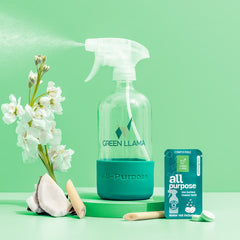
What we'd use
All-Purpose Spray Glass Bottle Cleaning Kit with Lemongrass Essential Oil & Sleeve
Use concentrated, clearly labeled products in refillable bottles, match pH to the job, and keep water use light on moisture-sensitive floors. Small, smart habits keep floors cleaner for longer. Our All-Purpose Spray kit pairs a refillable glass bottle with a lemongrass essential oil scent, $12.95 for the kit. Green Llama makes this product.
Shop All-Purpose Spray Glass Bottle Cleaning Kit with Lemongrass Essential Oil & Sleeve →Green Llama makes this product.
Natural Stone: Marble, Granite, Travertine
Never use acid on stone
Never use vinegar, lemon, or any acid on natural stone. On marble, limestone, and travertine, acids react with the calcium carbonate in the stone and etch the surface, leaving permanent dull spots.
pH-Neutral Damp Mop
- Prep. Gently sweep or dry mop to remove grit that can scratch.
- Cleaner. Use a ready-made pH-neutral cleaner labeled safe for stone.
- Damp mop. Lightly mist the mop pad, and avoid wetting the stone.
- Buff dry (optional). For polished stone, buff with a clean dry cloth for a high-shine finish.
Quick questions
How often should you mop your floors?
It depends on the floor and the traffic, so check your floor's care guide. For wood, the National Wood Flooring Association recommends sweeping or dust mopping daily, vacuuming weekly, and a cleaner made for the finish monthly. For laminate, sweep or vacuum at least once or twice a week to keep grit from scratching. When you do mop, swap pads as they load with soil, because a dirty pad only spreads residue.
What do I use to mop hardwood floors?
Use a cleaning product made for your floor's finish, as the National Wood Flooring Association advises, and skip wet mops and steam mops. Lightly mist your cloth or mop so it feels just damp, then work in sections following the wood grain. Excess water can damage the finish and the wood, and strong acids or alkalis slowly degrade the finish.
Can I use a steam mop on my floors?
Use with care, and check your floor's care guide first. Avoid it on hardwood: the National Wood Flooring Association says steam mops damage the finish and the wood over time. Laminate guides also warn that wet cleaning can cause swelling, warping or delamination. On those floors, a damp mop is safer: light moisture should dry quickly, and puddles mean the pad is too wet.
Is dish soap a good floor cleaner?
Not ideal. Flooring guides recommend a cleaner made for your floor's finish, and the laminate guide we cite warns against mopping with soap or detergent. Choose pH-neutral floor cleaners or simple vinegar solutions where compatible. Never use vinegar on natural stone: on marble, limestone and travertine, acids react with the calcium carbonate and etch the surface, leaving permanent dull spots.
Sources
- Mack, R. C., & Grimmer, A. (2000). Assessing cleaning and water-repellent treatments for historic masonry buildings (Preservation Brief 1). National Park Service, U.S. Department of the Interior.
- National Wood Flooring Association. (2019, March 5). Spring cleaning: Top tips for caring for wood floors.
- Metro Vancouver Housing. (2013). Home sweet home: Caring for your flooring, laminate. Metro Vancouver.
- Turner, P. R., & Gibson, S. M. S. (2018). Green cleaning: Recipes for a healthy home (HACE-E-73-1). University of Georgia Cooperative Extension.


